The Pillow – More Than Just a Headrest
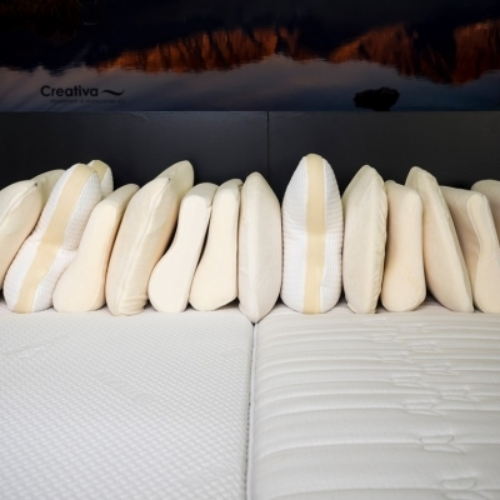
Who hasn’t shifted their pillow back and forth to find the right position for their head? However, anyone who struggles with their pillow every night and wakes up in the morning feeling tense or even with pain in the neck and shoulder area, rather than feeling refreshed, should pay closer attention to their pillow.
Choosing the right pillow is crucial for a restful night’s sleep. Along with the mattress, the pillow is key to your sleeping position and proper spinal alignment: it supports the head, relieves pressure on the cervical spine, and prevents the neck and shoulder muscles from becoming overstretched. At the same time, the pillow is the part of the bed that takes the most strain alongside the mattress: On average, it supports approximately 4.7 kg night after night (equivalent to the weight of an adult’s head), withstands up to 40 head movements, and absorbs heat and moisture released by the head. It is therefore worthwhile in many respects not to simply rest on your pillow without a second thought, but to take a closer look at it.
Know Yourself and Your Pillow
Everyone has had a bad night’s sleep, tossed and turned, or rolled from one side to the other at night. However, if this happens to you frequently, you should ask yourself the following questions about your pillow:
How does it feel against my head (softness of fabric/filling)? Do I sweat a lot on the pillow?
If you’re aware of your sleeping habits and pillow needs, you’ll quickly figure out if you need a new one.
Due to the heavy nightly use, pillows should be replaced every three to five years.
Tip for allergy sufferers
Even people allergic to dust mites can use down and feather pillows without any concerns and should look for the “Swiss Guaranty VSB” seal of quality when purchasing. This seal ensures hygiene and guarantees optimal protection against mites thanks to the pillow’s tightly woven fabric. For other health concerns, it is best to consult a doctor.
Finding the Right Pillow
Anyone deciding on a new pillow should try it out before buying. In addition to ensuring it suits your individual needs, keep the following in mind:
Specialty retailers will be happy to advise you on selecting the right pillow.