Sleep apnea
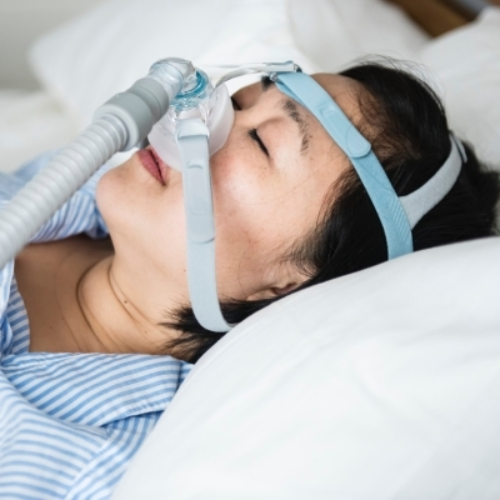
Sleep apnea is a type of breathing disorder that typically occurs during sleep.
Explanation
Mostly unconscious pauses in breathing during sleep.
These breathing pauses lead to reduced oxygen supply and a simultaneous increase in blood carbon dioxide levels, resulting in repeated arousal responses (the body’s alarm reaction). However, most of these arousal responses do not result in conscious waking but merely in increased bodily functions, such as a rapid heart rate. For this reason, they are usually not noticed by those affected.
The consequence of these arousal episodes is non-restorative sleep, which usually leads to the typical, pronounced daytime sleepiness or an overwhelming urge to sleep (micro-sleep). The most common form is obstructive sleep apnea syndrome (OSAS).
Causes
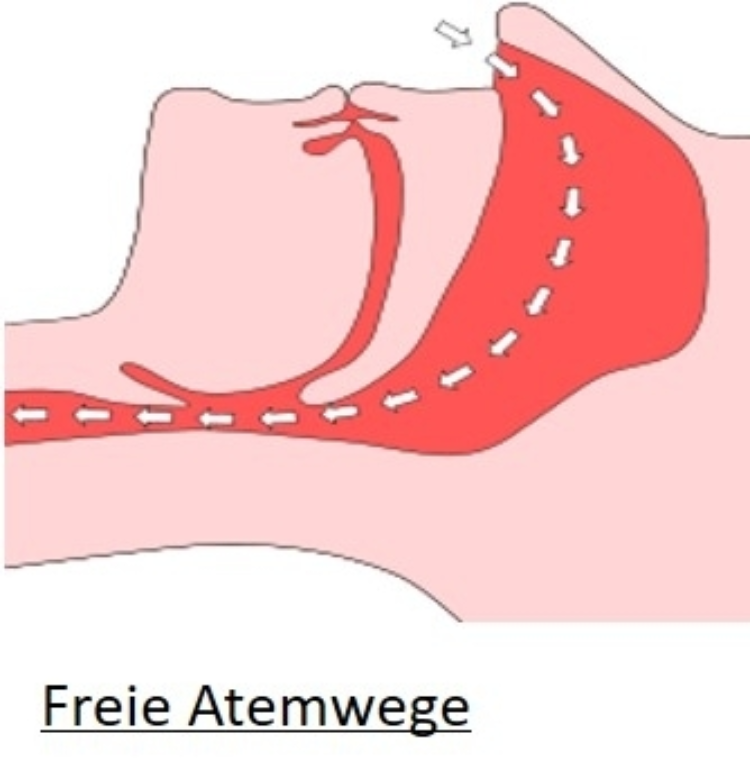
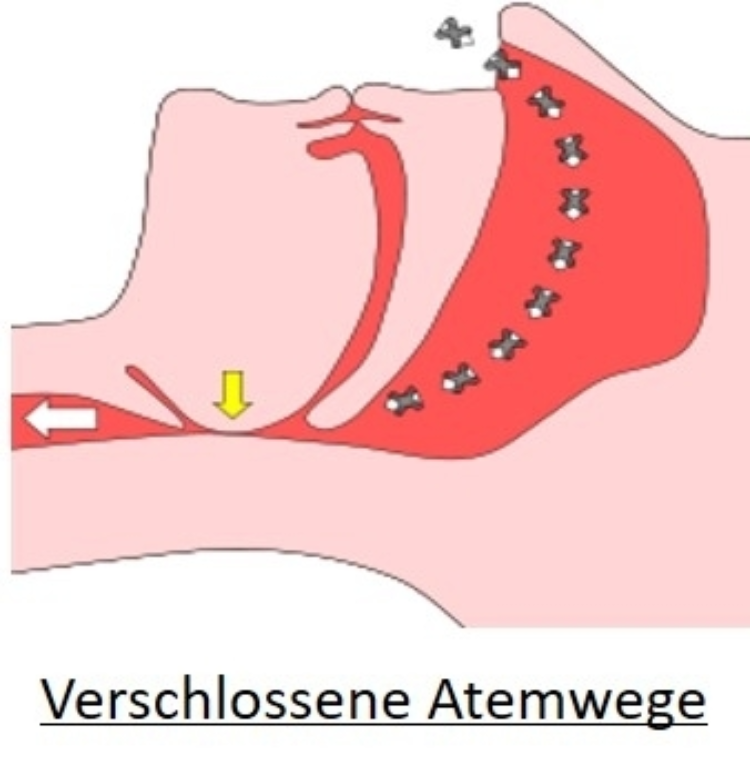
Significant relaxation of the ring-shaped muscles surrounding the upper airways during sleep. As a result, the nasal passages or oropharynx are no longer able to provide sufficient resistance to the negative pressure created in the lungs and bronchi during inhalation. The upper part of the airways collapses, leading to an obstruction of the airways.
Prevalence
Often seen in heavy snorers. The following risk factors can contribute to sleep apnea (OSAS):